Making your own Fibre Optic Light
by
Herman de Vries
|
|
A simple fibre optic light
is easy to make. This light simply uses a halogen lamp from Home Depot, a box
made of ¾” plywood, two 10 foot lengths of 30 strand fibre optic cable from a
local swimming pool company and a cooling fan from Princess Auto, a surplus
supply company. I priced out a fibre optic
light at over $400, and this cost me less than $90 to make. The cable was the
most expensive item. The exterior dimensions of
the box are 14” long, 7” high and 6.5” wide. |
|
|
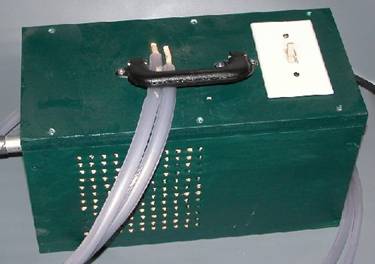
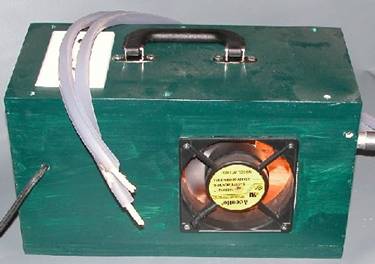
This shows the fan side of
the box. The fan is absolutely necessary to carry away the heat of the
halogen lamp. The box, even after having been lit for two hours, does not
even get warm. The fan has 4” blade, is
extremely quiet, and sucks the air through the box from the other side, past
the light and out on the fan side. |
|
|
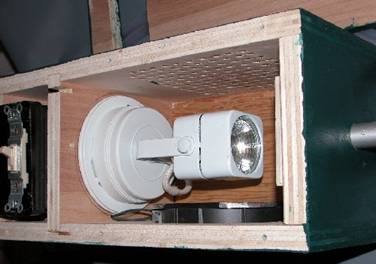
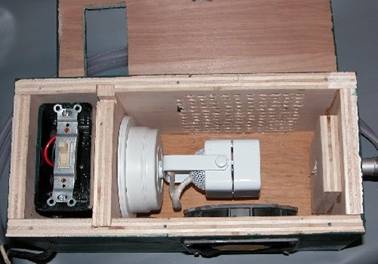
An inside view. The lamp is
spaced 2½” from the end of the fibre optic cable. The plastic coating around
the fibre optic cable is in the shape of a half circle. I simply put the two
flat sides together, trimmed the edges a bit to fit into a ¾” aluminum tube. They are held in the tube with silicone,
although in the photo I just had it duct taped in place. The tube is pressure
fit into a ¾” hole drilled into the double thickness of plywood at the right
end of the box, as seen here. That is so I can just pull it out of the hole
for storage or travel if I need to. The top is just held in place with screws. |
|
|
A view of the lamp, so you
can plainly see the kind I used. The lamp is a 50 watt halogen spot light. As you can see, the fan is
directly in line with the lamp, and a 5” square pattern of ¼” holes is
drilled in the opposite side of the box in a ½” grid. Pretty basic, but it works. |
|
|
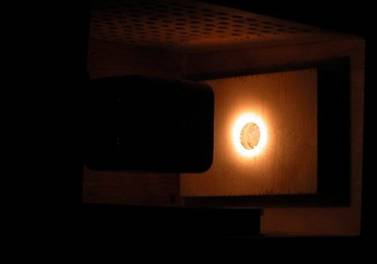
Here you can see how the
spot light is focussed directly on the ends of the two fibre optic cables
inside the aluminum tube. |
|
|
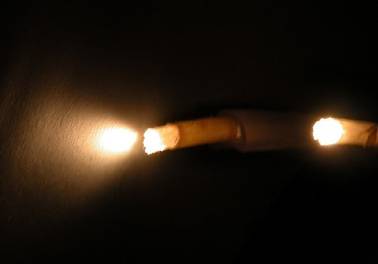
This is the business end of
the cable. I haven’t yet done it, but I am going to silicone the 30 fibres
from each cable into a ¼” copper tube, 6” long, to give them some rigidity.
The copper tube can taped to a chisel or simple held in place with your hand
on the chisel, to illuminate the interior of your hollow form. My intention is to use the
cable inside the hollow form with the shop lights off to shine through the
thin walls of the form. This light is very intense. It will hurt your eyes to look directly into this end of the cable. |